Menu
Your cart is empty
Looks like you haven't added anything to your cart yet


Bedroom Storage Solutions: How to Choose the Right Chest of Drawers, Tallboy or Bedside Table
Bedrooms collect clutter fast, even when you have a wardrobe. The right storage doesn’t just “hold more”, it keeps daily life smoother: clothes stay organised, surfaces stay calmer, and you stop shuffling piles from chair to chair. This guide helps you choose the best bedroom chest of drawers, tallboy, or bedside tables based on your room layout, what you’re storing, and what will hold up over time.
Quick pick guide:
- Small bedroom / tight corners: choose a tallboy (tall chest of drawers)
- Need lots of folded clothing storage: choose a chest of drawers
- Need easy bedside essentials storage: choose 1–2 drawer bedside tables
- Want maximum organisation: look for 5–8 drawers with a practical layout
- Sharing storage: pick equal drawers so dividing space feels effortless
Start with your bedroom layout (a 2-minute measuring guide)
Most storage mistakes are sizing mistakes. A piece can look perfect online but feel bulky in real life if drawers can’t open properly or walkways get blocked. Before you shop seriously, pick the wall or corner you’re using and measure the usable space, not just the empty space.
Check these first:
- Usable width: exclude doors, wardrobes, windows, vents and awkward corners
- Drawer clearance: drawers should open fully without hitting the bed
- Walkways: make sure the main path through the room stays comfortable
- Power points and switches: especially if you want lamps/chargers on top
- Skirting boards and door swing: common reasons furniture sits out from the wall
If the room is compact, vertical storage usually feels better. If you have a long open wall, a wider chest can look more balanced.
Let what you store decide what you buy
Storage works best when it matches your habits. If you’re mainly storing folded clothing, drawers will serve you better than shelving because everything stays separated and easy to access. If your bedroom “clutter” is mostly small items, you’ll want more drawer separation so things don’t collapse into one messy zone.
A simple way to decide:
- Folded clothing (tees, knitwear, jeans, activewear): chest of drawers or tallboy
- Small items (socks, accessories, skincare, cables): more drawers or mixed drawer sizes
- Bulky items (blankets, winter layers): deeper drawers or fewer, larger drawers
- Shared bedrooms: equal drawers are easier to split and keep tidy
Chest of drawers vs tallboy vs bedside tables
These three pieces overlap, but they suit different layouts.
A chest of drawers is wider and often lower, which makes it ideal when you have a decent stretch of wall space and want easy-access storage for folded items. It also gives you a larger surface for styling with a lamp, mirror, or artwork, and it can double as a simple “getting ready” station.
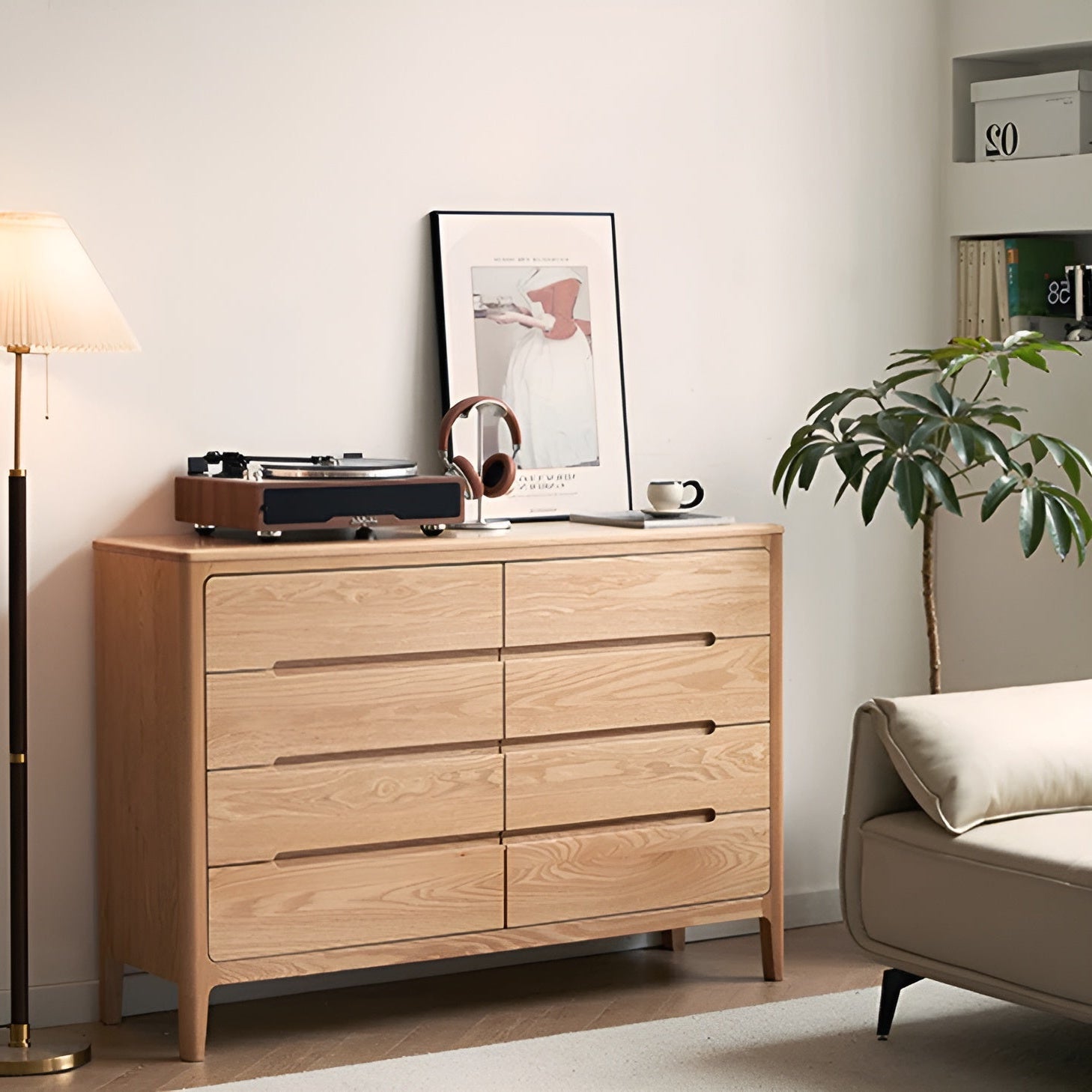
A tallboy (tall chest of drawers) is the smarter option when your bedroom is tight. You get strong storage capacity while keeping the footprint small, so it works well in corners, narrow walls, and rooms where wardrobes and doorways already dominate. Because tallboys are taller and slimmer, stability matters more, and anchoring is a sensible safety step if kids are around.

Bedside tables are all about daily convenience. They keep your essentials close without crowding the room, and the right choice depends on how you live: drawers hide clutter, shelves keep things grab-and-go, and two-drawer designs tend to keep the top surface calmer.

Choosing the right size (small vs master bedrooms)
Proportion matters as much as measurement. In smaller rooms, the best storage is the one that doesn’t make the space feel tighter, which is why tallboys and compact bedsides are so popular. In larger rooms, you can comfortably use wider pieces and make storage a feature rather than a compromise.
A practical guide:
- Small bedrooms: tallboy + compact bedside tables
- Medium bedrooms: 5-drawer chest (or tallboy + wider bedsides)
- Large bedrooms: wider chest (6–8 drawers) + full-size bedside tables
Also consider height. If your bed is low, a very tall piece can feel visually heavy. If your bed is higher, a very low chest can look undersized. Step back and check the overall balance.
Drawer count and layout: 3 vs 5 vs 7 drawers
Drawer count is easy to compare, but layout is what makes a piece feel “right” day to day. A 3-drawer chest suits minimal storage needs and smaller rooms. A 5-drawer chest is the most versatile option for most homes because it gives you separation without getting bulky. An 7-drawer chest is ideal when you want serious organisation, especially in shared bedrooms.
Use this quick logic:
- 3 drawers: guest rooms, minimalist wardrobes, smaller spaces
- 5 drawers: everyday sweet spot, easiest all-rounder
- 7 & 9 drawers: maximum organisation, shared storage, busy households
- More small items: choose more drawers or smaller sections
- More bulky items: choose deeper drawers or fewer larger drawers
Materials and build quality that matter in a bedroom
Bedroom storage is used daily, so quality shows up fast. Smooth drawer movement, stability when drawers are open, and a solid frame make a bigger difference than decorative details. If drawers stick, wobble, or the unit feels unstable, it becomes annoying quickly.
When you’re comparing options, focus on:
- Drawer glide and stability when extended
- Strength of drawer bases (especially for heavier items)
- Frame stability (no wobble, no racking over time)
Drawer glides: metal runners vs traditional timber-on-timber
You’ll generally see two common drawer glide styles in bedroom storage. Metal runners (often side-mounted or concealed) are designed for a consistently smooth pull, even when drawers are heavier. They’re a great fit for high-traffic use and for people who want a “quiet, effortless” glide. The trade-off is that the feel can be more mechanical, and the runners add extra components that can be more noticeable if you prefer a clean, all-timber interior.Traditional timber glides use timber rails and grooves (the drawer slides on wood, with the channel formed directly in the structure). This style is popular in solid wood furniture because it keeps the construction simple and timeless, with fewer parts and a more “crafted” feel. It’s also easier to maintain over the long term in the sense that there’s no hardware system to replace. The trade-off is that timber-on-timber can feel firmer than metal runners, especially when new, and it benefits from good build accuracy and occasional care (keeping drawers clean and not overloading them helps keep the glide smooth).
Which one is better? There isn’t a universal winner. If you want the smoothest, most consistent action, go metal runners. If you prefer a more traditional solid-timber build and a natural drawer feel, timber glides can be a great choice.
Solid timber is often chosen for its substantial feel and long-term performance when built well. Regardless of material, prioritise construction that supports daily use.
Colour and finish: wooden, white, black
Colour changes how storage feels in a bedroom. Natural timber tones often bring warmth and work easily with soft neutrals. White finishes can brighten smaller rooms and keep things feeling light. Black creates contrast and a modern edge, especially against lighter walls and fabrics.
If you want the room to feel cohesive without buying a matching suite, keep one or two elements consistent across pieces, such as timber tone, handle finish, or overall style direction.
Flatpack vs solid timber (including IKEA comparisons)
It’s normal to compare flatpack options, including popular IKEA ranges, because they’re accessible and often cheaper upfront. Flatpack can suit tighter budgets, quick setups, or short-term furnishing. If you’re buying for long-term daily use, durability and stability matter more, and that’s where construction details become the deciding factor.
No matter where you buy, check:
Drawer wobble when extended
- Base support and stability
- Back panel strength
- Safety anchoring for tall pieces
It’s less about the logo and more about whether the build suits the way you’ll use it.
Can these pieces work outside the bedroom?
Yes, and that flexibility is a bonus. Tallboys can work in hallways for linen and everyday essentials, and chests of drawers can be useful in living spaces for cables, games, and miscellaneous household storage. Choosing a clean, timeless design makes it easier to repurpose later.
Quick checklist before you buy
- Measure usable width, depth, and drawer opening clearance
- Choose chest, tallboy, or bedside tables based on layout
- Pick a drawer layout that matches what you store
- Check stability and how drawers glide
- Plan what sits on top so it stays neat
- Anchor taller pieces if needed for safety
FAQ
-
What’s better for a small bedroom, a tallboy or a chest of drawers?
A tallboy usually works better because it stores vertically and keeps the floor area more open. A chest suits rooms with a longer open wall and can offer a larger top surface for styling. -
How many drawers do I need: 3, 5, or 8?
Three drawers suit minimal needs or guest rooms. Five drawers suit most everyday wardrobes. Eight drawers are best for maximum organisation or shared storage. -
What height should bedside tables be?
They generally look and function best when the top is roughly level with your mattress height. -
Where should I place a chest of drawers in the bedroom?
A free wall where drawers can open fully is ideal, such as opposite the bed or beside the wardrobe, without blocking walkways. -
Is solid wood worth it compared to flatpack?
If you want a long-term piece that feels substantial and stays stable with daily use, solid timber is often worth it when built well. Flatpack can suit short-term needs, but construction quality still matters either way.
- Choosing a selection results in a full page refresh.